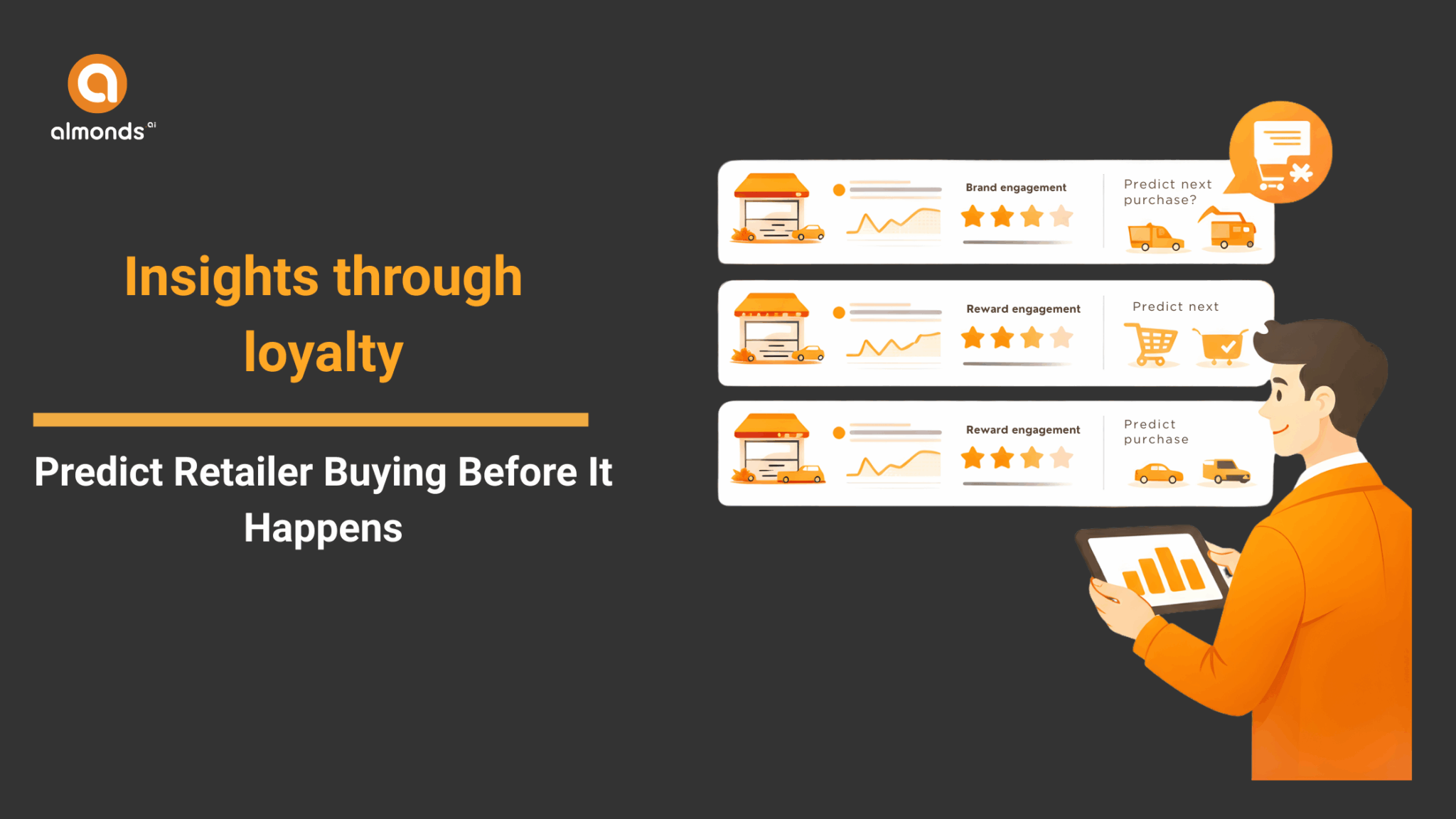

Brands are not simply basing their understanding of retailers on past sales reports anymore. They require more intelligent, data-driven methods of anticipating what retailers will purchase, when they will purchase, and in what quantities they will purchase. It is at this point that the retailer loyalty programs come in with an effective fight.
These programs also produce valuable insights beyond rewards and incentives that can assist a brand to forecast demand, plan stock, and enhance relationships in the channel. Planned well, retailer loyalty programs are proactive solutions that steer smarter business choices and future expansion.
The Change of Transactions to Intelligence
The conventional B2B selling emphasized order history and distributor responses. Although this data is helpful, it is usually received late and is not contextualized. Contemporary retailer loyalty programs acquire real-time behavioral information at retailers, providing brands with early indicators of purchase intent.
Each interaction, whether it is earning points, redeeming rewards, being involved in a scheme, or responding to an offer, leaves a trail of data. In the long run, such data assists the brands in ceasing reactive selling and adopting predictive planning.
How Does Loyalty Information Reveal Purchasing Trends?
- Frequency and Timing of Purchasing
The loyalty systems monitor the frequency with which retailers make orders and at what times the demand is greatest. Brands are able to find out seasonal patterns, restocking processes, and slow-moving periods. This knowledge can be used in predicting future orders.
As an illustration, when a retailer always boosts buying during the festive seasons, brands can be ready with specific offers. This is what makes retailer loyalty programs one of the strengths in demand prediction.
- Product Tastes and Brand Dynamics
Retailers do not tend to purchase everything equally. Loyalty data helps to identify the best product categories, SKUs, or price ranges that work with the particular retailers. Analyzing: Brands can foresee future purchasing behavior through analyzing:
- The most common items sold.
- Products associated with increased reward redemption.
- Promotions that have not been taken into account.
- It facilitates intelligent assortment planning and custom selling.
- The Levels of Engagement as Purchase Signals
Retailers that make active use of loyalty campaigns by checking points, joining a challenge, or cashing in rewards are more likely to make repeat or larger value orders. Poor activity may be an indication of waning interest or threat of churn. Retailer loyalty programs take into account the level of engagement scores to forecast which retailers are likely to expand and which might require intervention.
- Response to Schemes and Incentives
Retailers do not react to all offers. Loyalty data indicates which incentives are motivating and which are not. By analyzing, brands can anticipate future purchasing behavior.
- Discount-driven purchases
- Success of upselling through rewards.
- Tier-based program performance.
This enables brands to come up with smarter schemes that align with retailer motivations.
- Better Demand Forecasting
Avoiding overstocking and shortage of stock in B2B channels is highly reliant on proper demand forecasting. Loyalty-based data has real-time data on retailer buying trends, purchase frequency, and shifts in demand seasonally.
Using retailer loyalty programs, the brands will be able to predict demand at the retailer and regional level, particularly for the products that move fast or those that have seasonal demand. This predictive visibility assists the brands in inventory planning, supply-chain optimization, and proactive response, not just based on past sales averages.
- Focused Sales and Marketing Strategies
Mass promotions tend to cause wastage of funds and poor interaction. Through the Retailer Loyalty Programs, using the data, the brands can be able to know what a particular retailer is likely to buy next.
The sales and marketing teams can then be able to provide personalized schemes, product suggestions, and timely incentives. This is a focused strategy that enhances conversion, establishes better retailer relationships, and boosts ROI a lot more than wastage in marketing and promotion.
The AI and advanced analytics role
The analysis can only go so far using manual analysis. It is here that AI-driven platforms come in. Loyalty solutions Advanced solutions process a lot of data on retailers to detect latent patterns, anticipate future purchasing, and prescribe the next-best action to sales teams.
Algorithms such as Almond AI assist brands to convert loyalty information into actionable data. Through AI, automation, and analytics, brands will be able to predict demand, engage the individual, and scale channel performance.
Conclusion
Rewards are no longer about loyalty programs. Retailer loyalty programs are strong weapons when applied tactfully to forecast retailer purchasing actions. They deliver live insights on preference, engagement, and intent, enabling brands to plan better, sell smarter, and build stronger B2B relationships.
Brands that use loyalty data smartly will be ahead of the market trends and retailer demands as competition intensifies. Almond AI allows you to empower your brand with AI-dependent insights and smarter retailer engagement. Make your retailer loyalty strategy a predictive engine that delivers sales, loyalty, and long-term success.